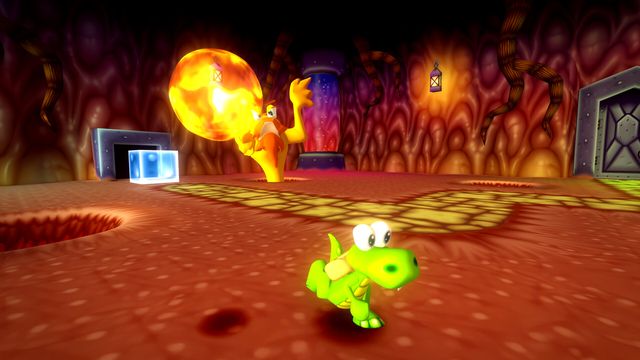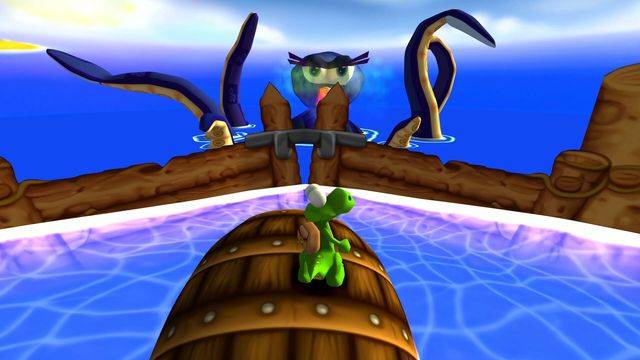
Jump, tail spin and the triple jump
Croc keeps the jump and the tail spin from the first game and adds a triple jump: three timed jumps in a row that clear gaps the double jump cannot reach.
Three jumps, one rhythm
Croc's move set is small and deliberate. He jumps, he tail-spins, and in this remaster he triple-jumps. Argonaut's description puts it plainly: "Croc's signature moves are back, but jumping and tail-spinning are just the beginning. A new triple jump gives Croc extra height when he needs it most."
| Move | Input | Reach | Best used for |
|---|---|---|---|
| Jump | Single press | Low ledges, gaps, enemies | General traversal |
| Tail spin | Attack button | Arms-length radius | Crates, switches, Dantinis |
| Triple jump | Three jumps in sequence | Highest reach in the game | Crystal ledges, Golden Gobbo perches |
| Jelly jump | With jelly active | High, floaty arc | Vertical routes the triple jump misses |
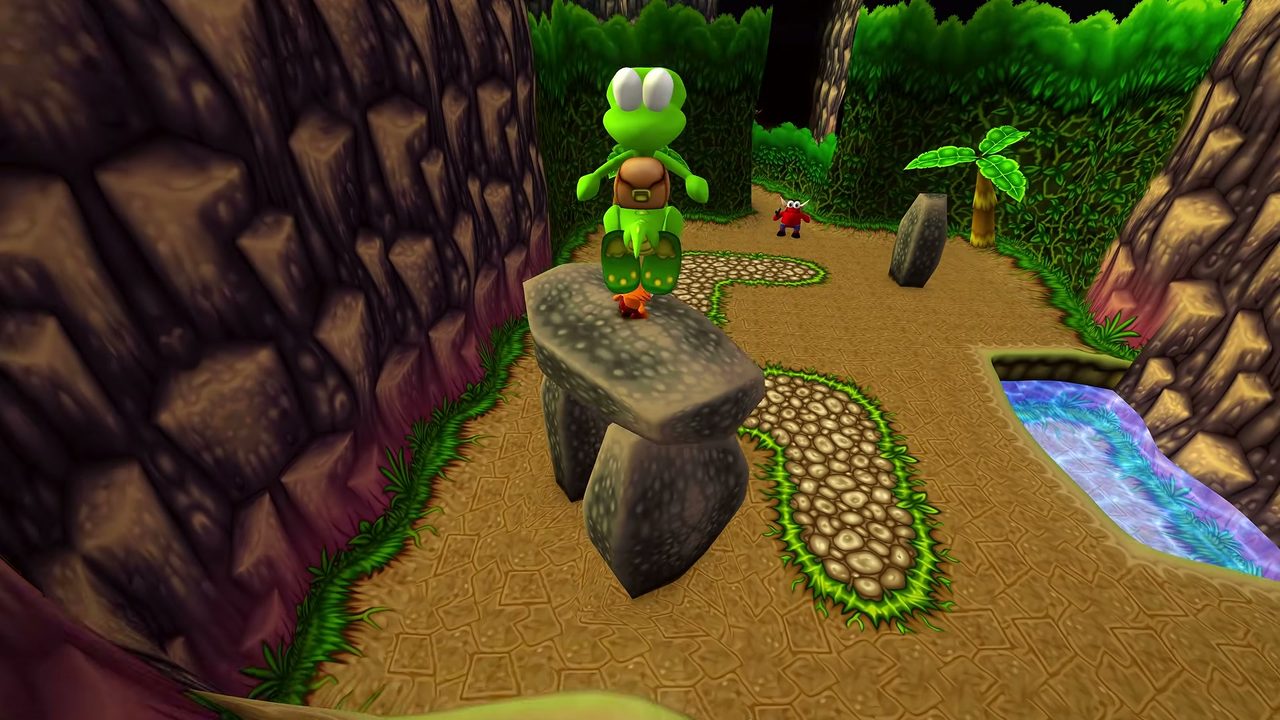
Why the triple jump changes routing
Before the third jump, a level's vertical structure is a ladder: you go up the way the designer built. The triple jump turns some of those ladders into optional shortcuts, because its apex clears ledges that were meant to be reached from a higher platform.
That has two consequences. The obvious one is that you can skip sections. The less obvious one is that crystals and Golden Gobbos are placed on the ledges the third jump reaches, so a player who never learns the timing will finish levels with 90 crystals and no statue. The collectibles page tracks both counters.
The timing, in plain terms
The triple jump is a rhythm, not a combo: jump, land, jump again quickly, jump a third time at the peak of the second. The window between the second and third input is the part that fails. If you press too early you get a normal jump; too late and Croc has already started falling.
Practise it in a flat room before you take it over a gap. Sea-level Sailor Village has open docks that are ideal, and falling in the water costs you nothing but a walk back.
Where each move is the answer
- Jump solves 80% of the game. If a gap looks unjumpable, check the camera before assuming you need a special move.
- Tail spin is the only way to break crates and hit switches that are above head height when you are standing on a platform edge. It also staggers smaller enemies so you can reposition.
- Triple jump is for crystal ledges, Golden Gobbo perches, and the vertical shafts in Cossack Village that look like dead ends.
- Jelly jump is the outlier: it reaches higher than the triple jump but has a floatier arc, so it is better for landing on small platforms than for crossing long gaps.
Vehicle moves are separate
Cars, boats, minecarts, gliders and planes each replace the move set rather than extend it. The one crossover is the hop: cars and minecarts can jump, which is how you clear gaps that are not ramps. Do not expect the triple jump to work in a vehicle — it does not.
Common mistakes
- Chaining the triple jump into a spin. They are different inputs and the spin cancels your momentum. Land first.
- Triple jumping at the edge of a platform. You need a run-up of about two steps; start too close and the first jump eats the ledge.
- Using the jelly jump as a gap-crosser. It floats, so a long gap drops you short. Use it for height, not distance.
- Ignoring the tail spin in boss rooms. Several Guardians spawn smaller enemies, and the spin is the cheap answer.
Where to read next
The controls page has the input mapping, and the levels overview shows which villages lean on vertical routing.