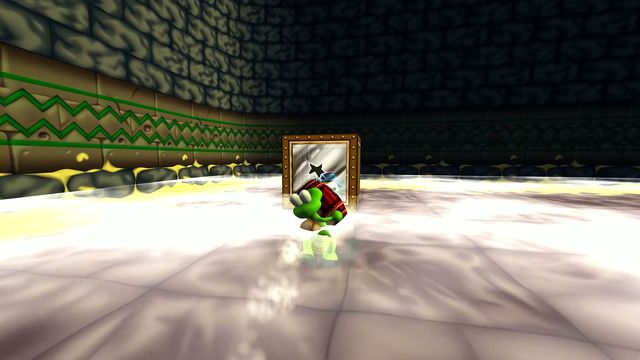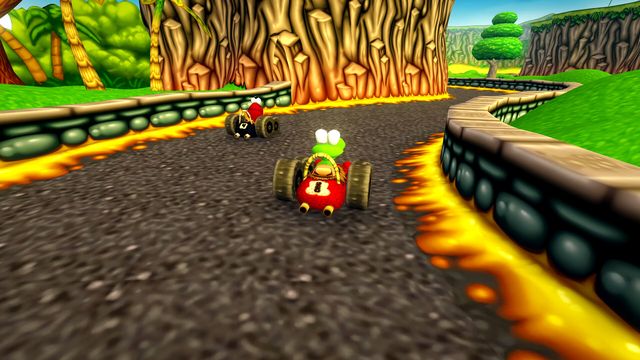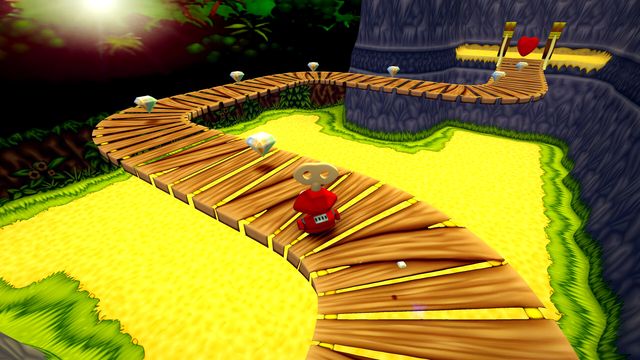
The 1999 game against the 2026 remaster
The remaster keeps the 1999 level design and story and rebuilds the presentation: new visuals, modernised controls, a triple jump and the Croc2pedia museum layered on top.
Same game, rebuilt presentation
Argonaut's own framing is consistent: this is a remaster, not a remake. The 1999 level design, the story about Croc's parents, the four villages and the Guardian roster all carry over. What changes is everything around them — the rendering, the controls, the camera, and a museum's worth of new material.
| Element | 1999 original | 2026 remaster |
|---|---|---|
| Platforms | Original PlayStation | PC, PS5, PS4, Xbox Series X/S, Switch |
| Studio | Argonaut | Titanium Studios, published by Argonaut Games |
| Visuals | Late-90s 3D | Rebuilt environments, characters and lighting |
| Controls and camera | Original scheme | Modernised for analogue sticks and current pads |
| Movement | Jump and tail spin | Jump, tail spin and the new triple jump |
| Levels | The original set | Over 40 levels across four villages |
| Extras | None | Croc2pedia museum and a making-of documentary |
| Achievements | None | 37 on Steam |
What the triple jump changes
This is the only mechanical addition Argonaut advertises, and it is the one that alters how the old levels play. In 1999, vertical routes were ladders: you climbed the way the level was built. With a third jump, some of those routes become optional, and ledges that were decoration in the original become reachable.
The consequence for returning players is real: routes you remember as fixed now have shortcuts, and collectibles placed on high ledges expect the new move. If you are coming back after 25 years, the muscle memory for gaps still works, but the vertical exploration does not.
What stayed the same
The story beats. The bottle on the beach, the missing parents, Baron Dante revived by the Dantinis, the inventor Gobbo taken prisoner — all of it is the 1999 plot, and the remaster does not rewrite it. The four village cultures, the Guardian names and the crystal economy are also unchanged in structure.
That matters for guide accuracy: a 1999 walkthrough's route logic still applies, even where the presentation differs. What does not carry over is anything built on the old control scheme or the old camera.
What is genuinely new
Two things, and both are production material rather than gameplay. The Croc2pedia is a digital museum with full design documentation, marketing assets, merchandise, animation tests, 3D model galleries of cut content, and interviews. The documentary traces the series' history through the same people.
For a remaster of a 1999 platformer, that is an unusual amount of archival content, and it is the strongest argument for the $29.99 price if you already own the original. The Croc2pedia page lists what is inside.
Is it worth rebuying?
Three cases where it is: you never finished the original and want a modern camera, you care about the museum and documentary, or you want the 37 achievements as a structured reason to replay. One case where it is not: you want a full remake with redesigned levels — this is the same game with new clothes and one new move.
Where to read next
The release-date page has the timeline, the platforms and price page has the storefront list, and the moves page explains the triple jump in detail.